13 Small Pantry Organization Ideas That Make Every Shelf Count
Small pantry organization ideas that fit more on every shelf: clear bins, step shelves, turntables, door space, baskets and a few habits that keep it tidy.

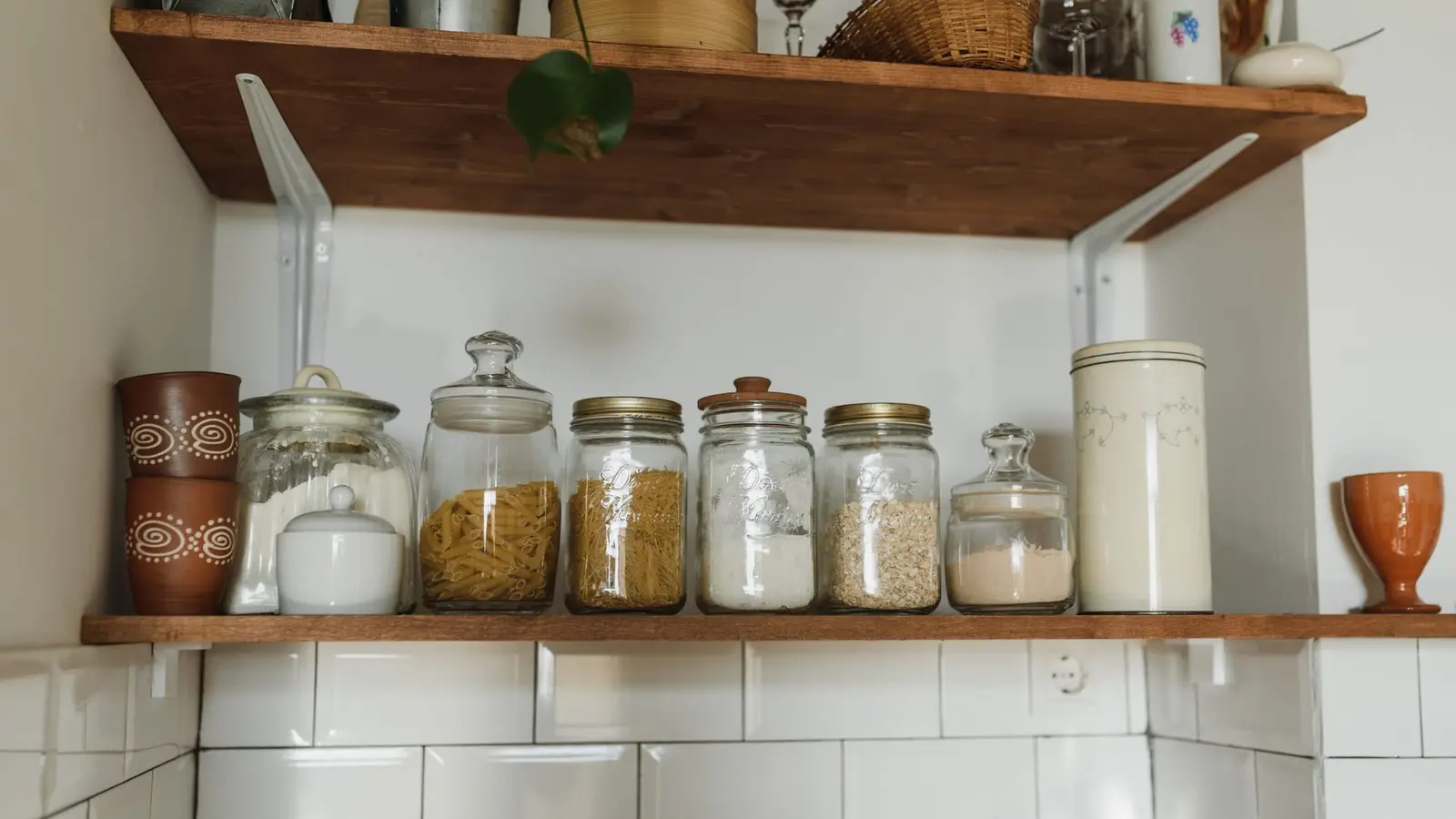
A small pantry holds more when every shelf has a job: group like with like, store dry goods in clear containers that stack, use step shelves and turntables so nothing hides at the back, and put the door and walls to work. Keep what you use every day at eye level and move backups somewhere else.
These 13 ideas work in a reach-in closet, a single cabinet or a corner of the kitchen. Start with the first two, since every idea after them depends on knowing what you have and how much room there is.
1. Empty it and sort what you have
Take everything out and group it on the counter: baking, breakfast, snacks, cans, pasta and grains, oils and sauces. Toss anything expired or stale, and set aside food you won’t eat for a food drive.
The groups you end up with become your zones, one per shelf or per bin. The declutter checklist covers the kitchen and the rest of the house the same way, if the pantry is only the start.
2. Measure before you buy anything
Measure the width, depth and height of each shelf, and the door opening too. A bin that’s a little too tall or too deep can waste a whole shelf.

Write the numbers down and take them shopping, or enter them into the bin and basket size calculator to see which standard sizes fit and how many line up side by side.
3. Use matching clear containers
Containers that are all the same shape stack and line up without gaps, so a shelf holds more. Clear sides let you see what’s inside and when it’s running low, without opening anything.
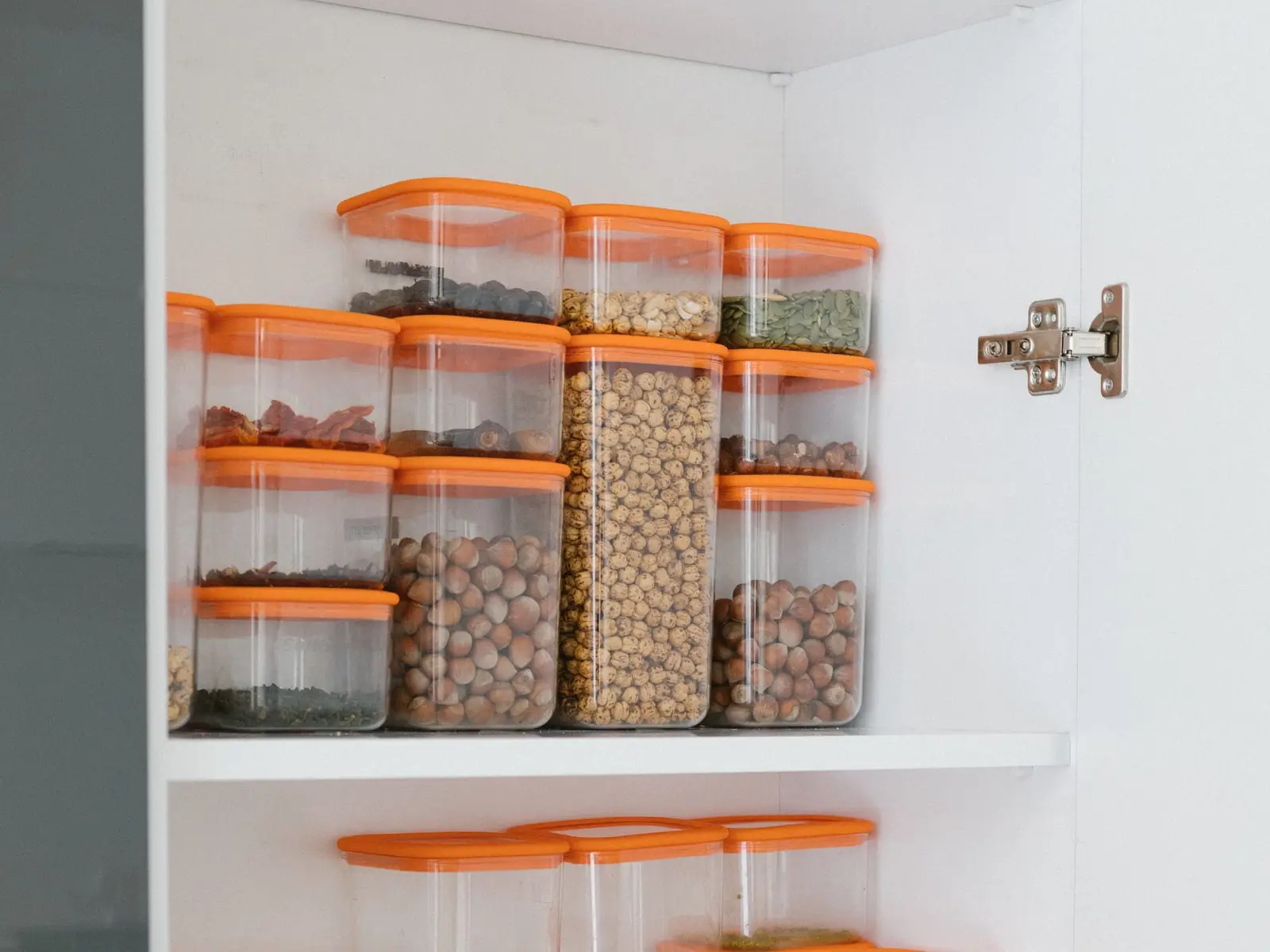
Square and rectangular containers waste less space than round ones. Pick one or two sizes that fit your shelf depth and stick with them, so you can swap them around as your groceries change.
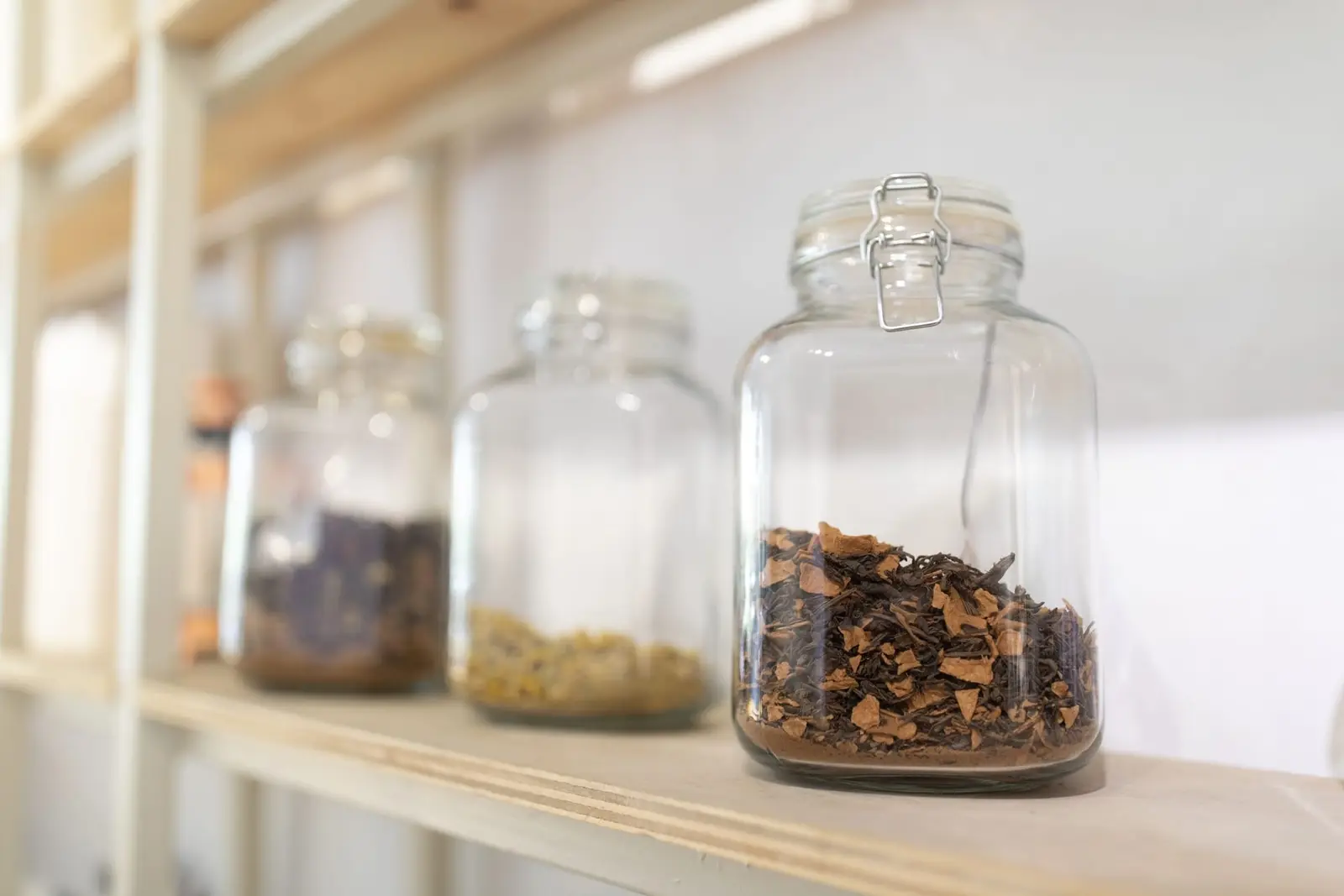
4. Decant dry goods into airtight jars
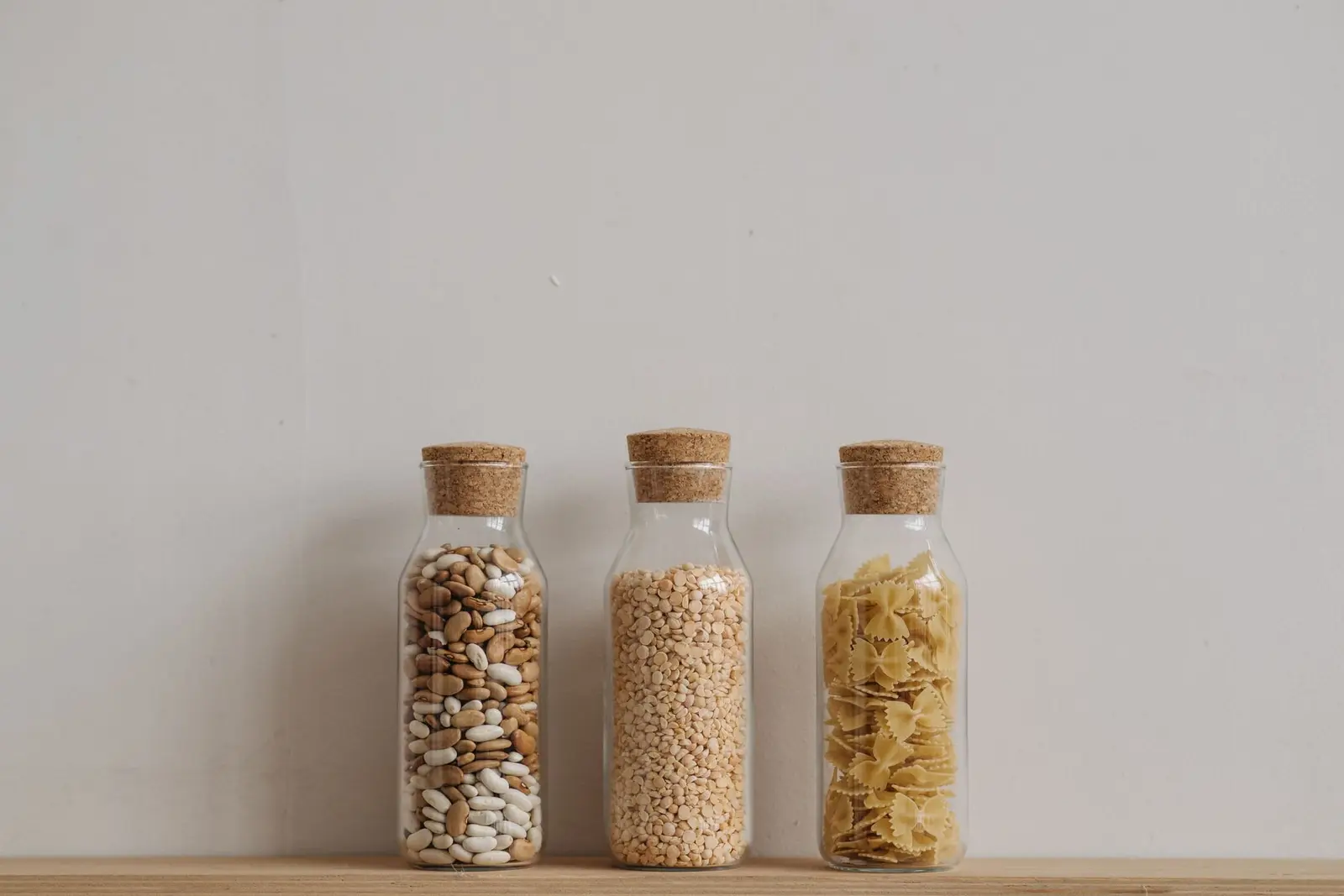
Flour, sugar, rice, oats, pasta and cereal take up less room out of their boxes and bags. Store them in tightly closed glass, metal or heavy plastic containers, which also keep pantry pests out of the food.
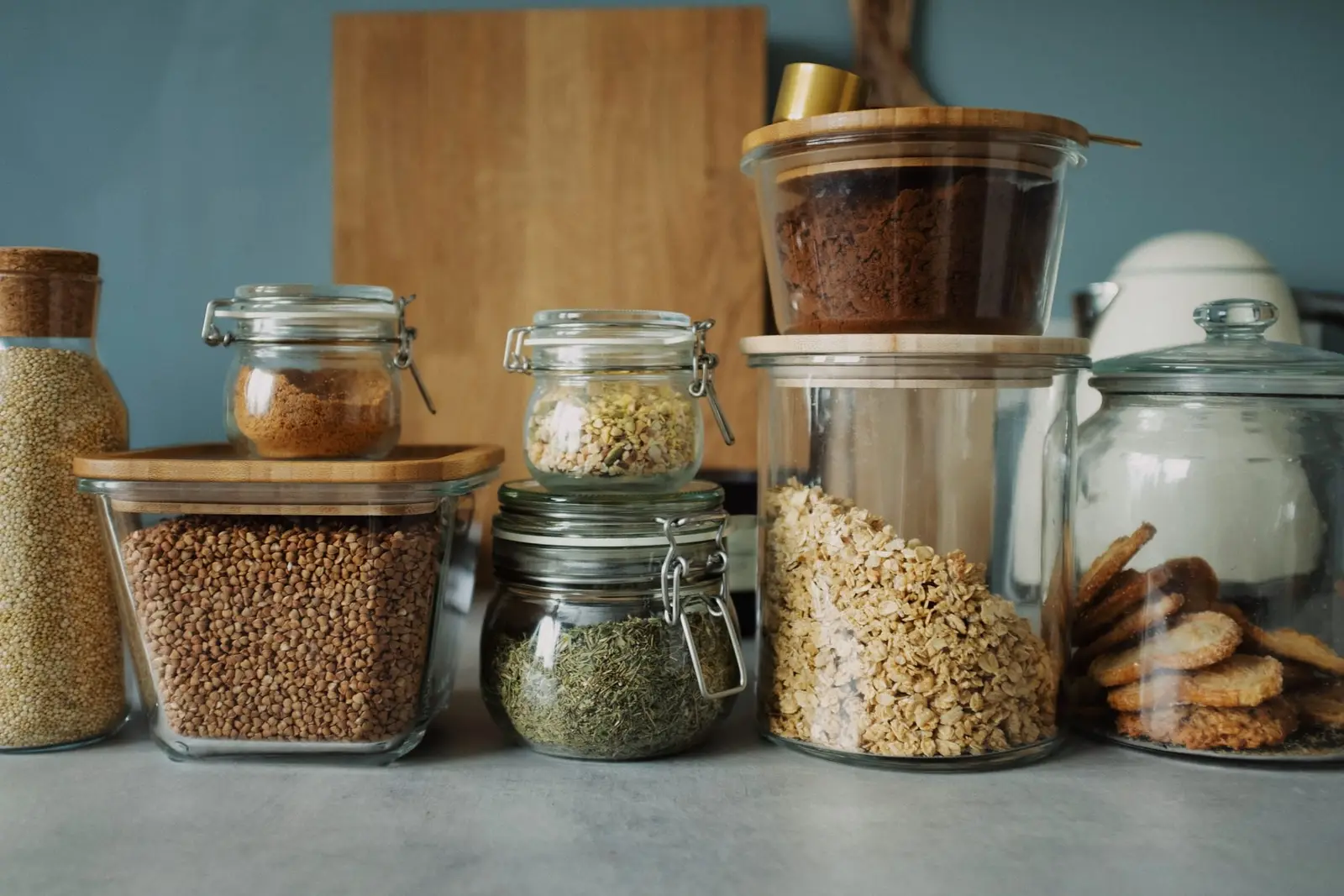
Only decant what you use often. Things you buy once a year can stay in their packaging, in a bin of their own.
5. Give spices and cans a step shelf
A tiered riser lifts the back row above the front one, so you can read every label at a glance instead of moving jars to find the one behind. It works for spices, cans, jars of sauce and small bottles.
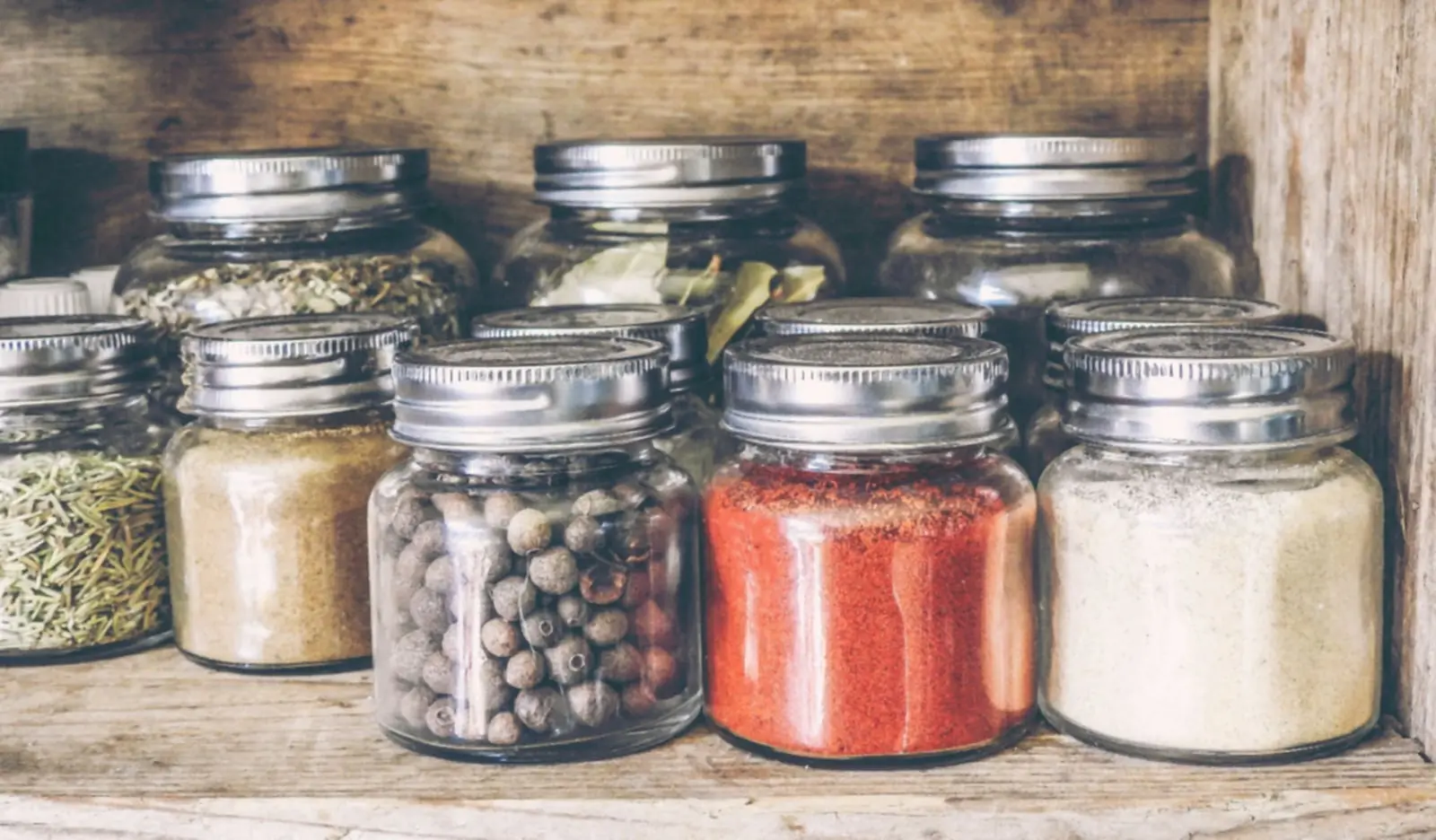
Expandable risers stretch to fit the shelf. Put the spices you use most on the front step and the rest behind.
6. Put oils and sauces on a turntable
Bottles are hard to reach in a deep or corner shelf. On a turntable, one spin brings the back bottle to the front, and a raised edge keeps them from tipping over.
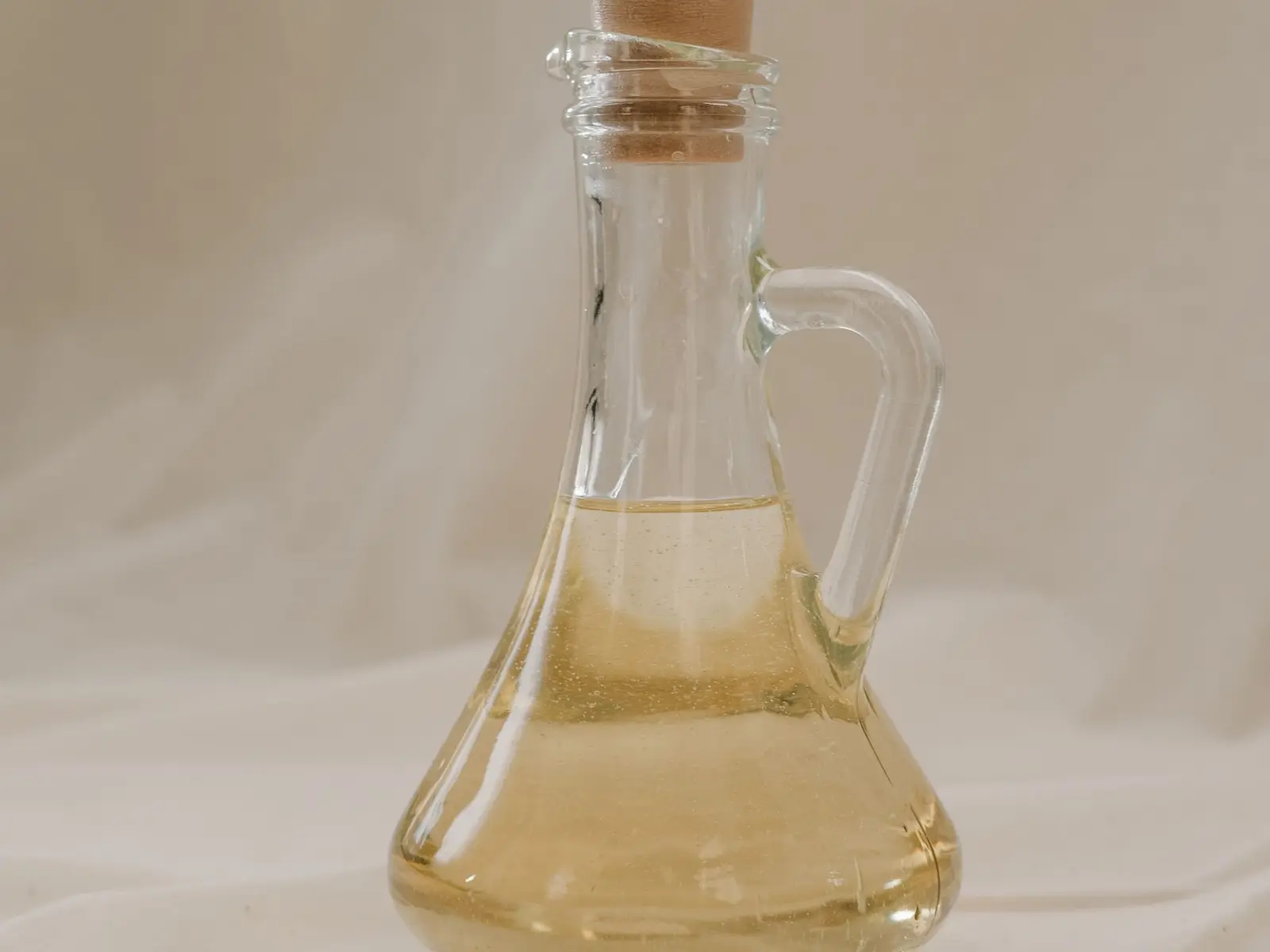
Set a turntable in each corner and group by use: cooking oils and vinegars on one, sauces and condiments on another. A tray under sticky bottles keeps drips off the shelf.
7. Corral loose packets in baskets
Snack bags, seasoning packets, drink mixes and baking odds and ends slide around and spill on a bare shelf. A basket or open bin for each group keeps them together, and you pull out the whole basket to find what you need.
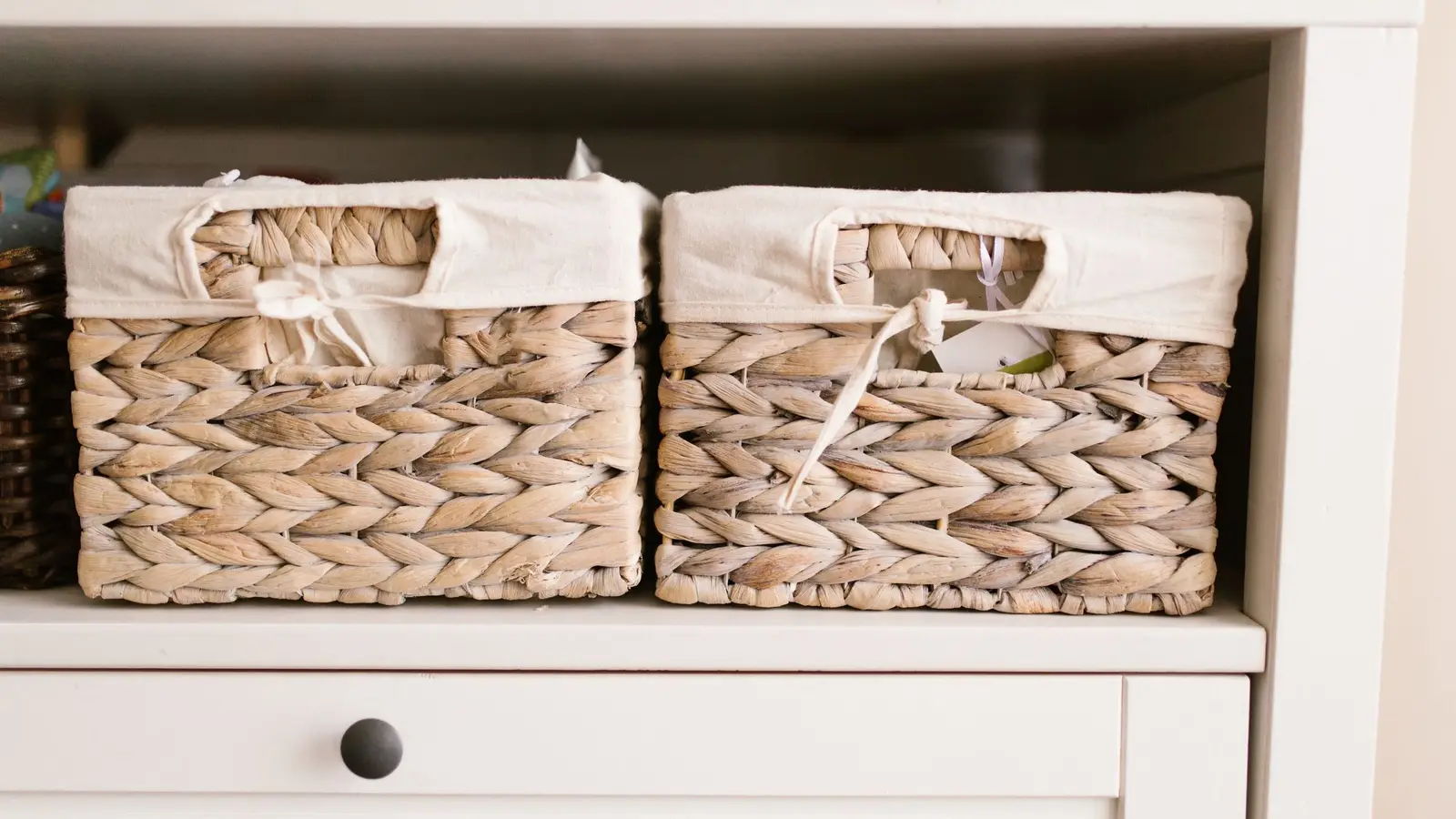
Label the front of each basket. Woven baskets look tidy on open shelves; clear bins work better where you want to see the contents.
8. Keep everyday things at eye level
The shelf between your shoulders and your waist is the easiest to see and reach, so give it to breakfast, snacks and the ingredients you cook with every week. Heavy cans, bottles and appliances go low; light, rarely used things go up high.
When groceries come in, put the new item behind the one you already have, so the older one gets used first.
9. Give produce an open basket down low
Potatoes keep best in a cool, dark place with air around them, away from fruit, and not in a warm cabinet like the one under the sink. An open or slotted basket on the pantry floor lets air in and keeps them where you can see them.
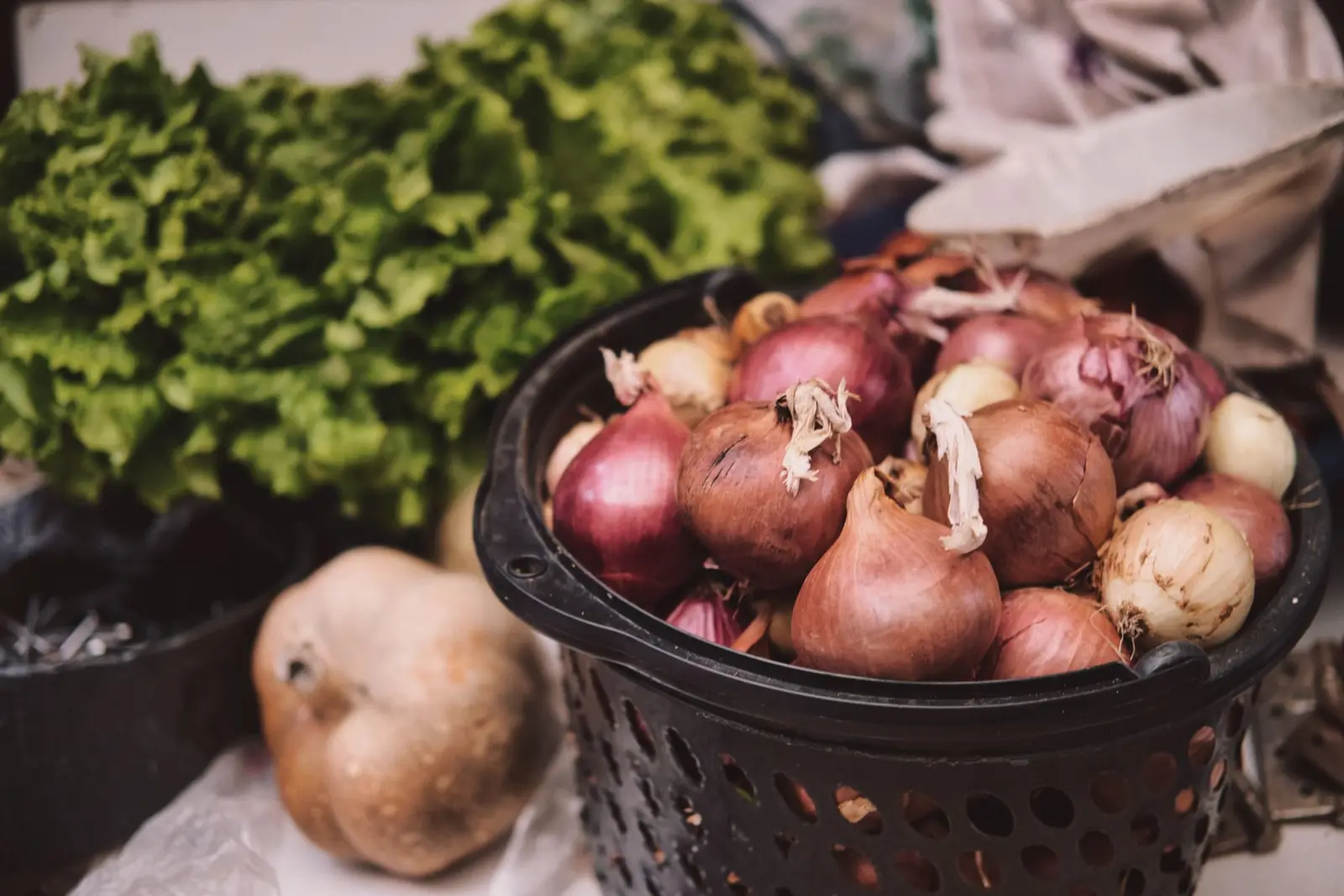
Onions go in an open basket of their own. Check both baskets each time you shop and use anything that’s starting to soften.
10. Use the walls and the door
The inside of the pantry door and the side walls are free storage. A door rack holds spices, foil and wraps, or snack bags; hooks or a rail hold aprons, reusable bags and measuring cups.
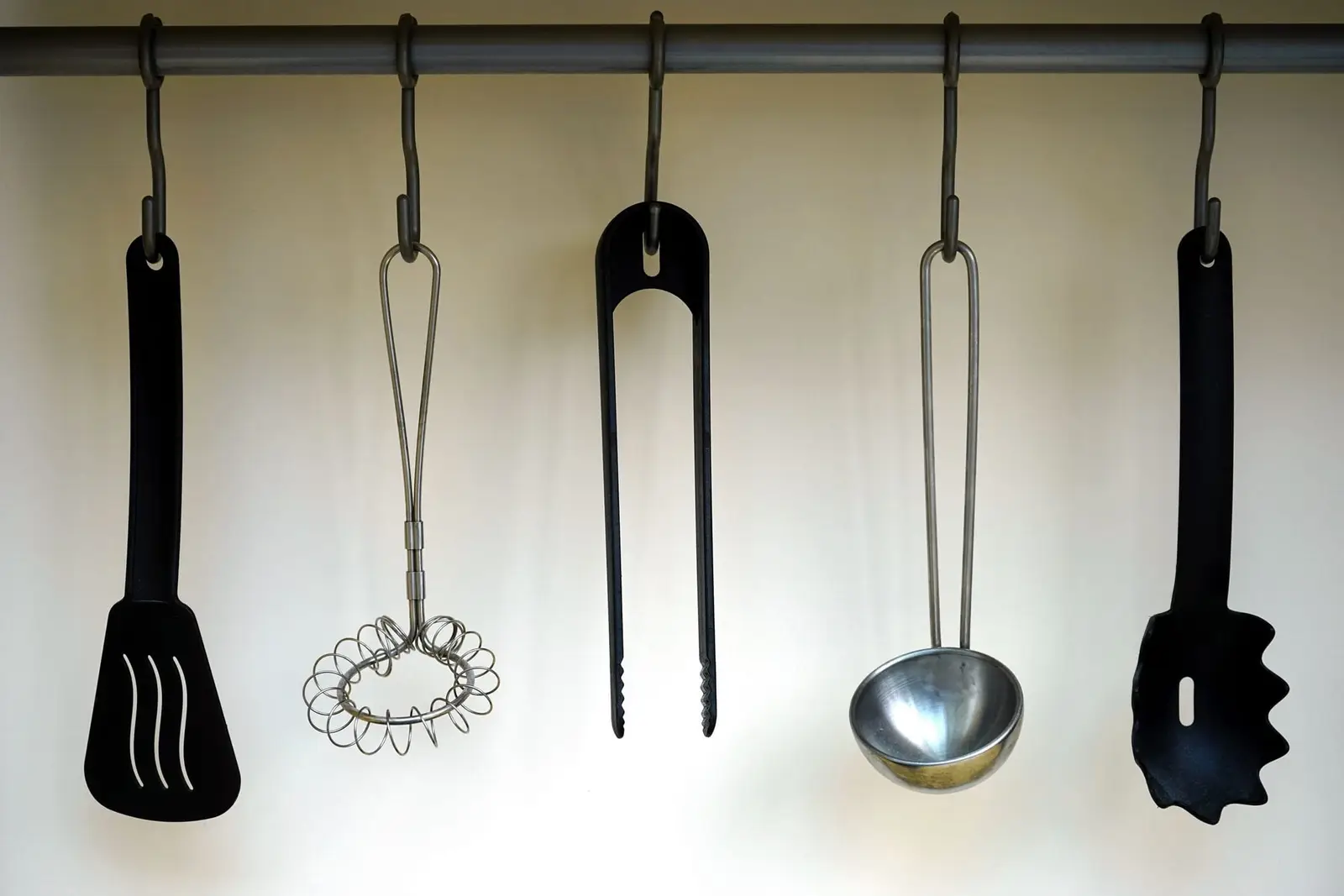
Measure the depth between the door and the shelves first, so the door still closes with everything in place.
11. Make a grab-and-go snack spot
Put snacks in one basket or bin at a height the kids can reach. They can help themselves without digging through the rest of the pantry, and you can see at a glance when it needs a refill.
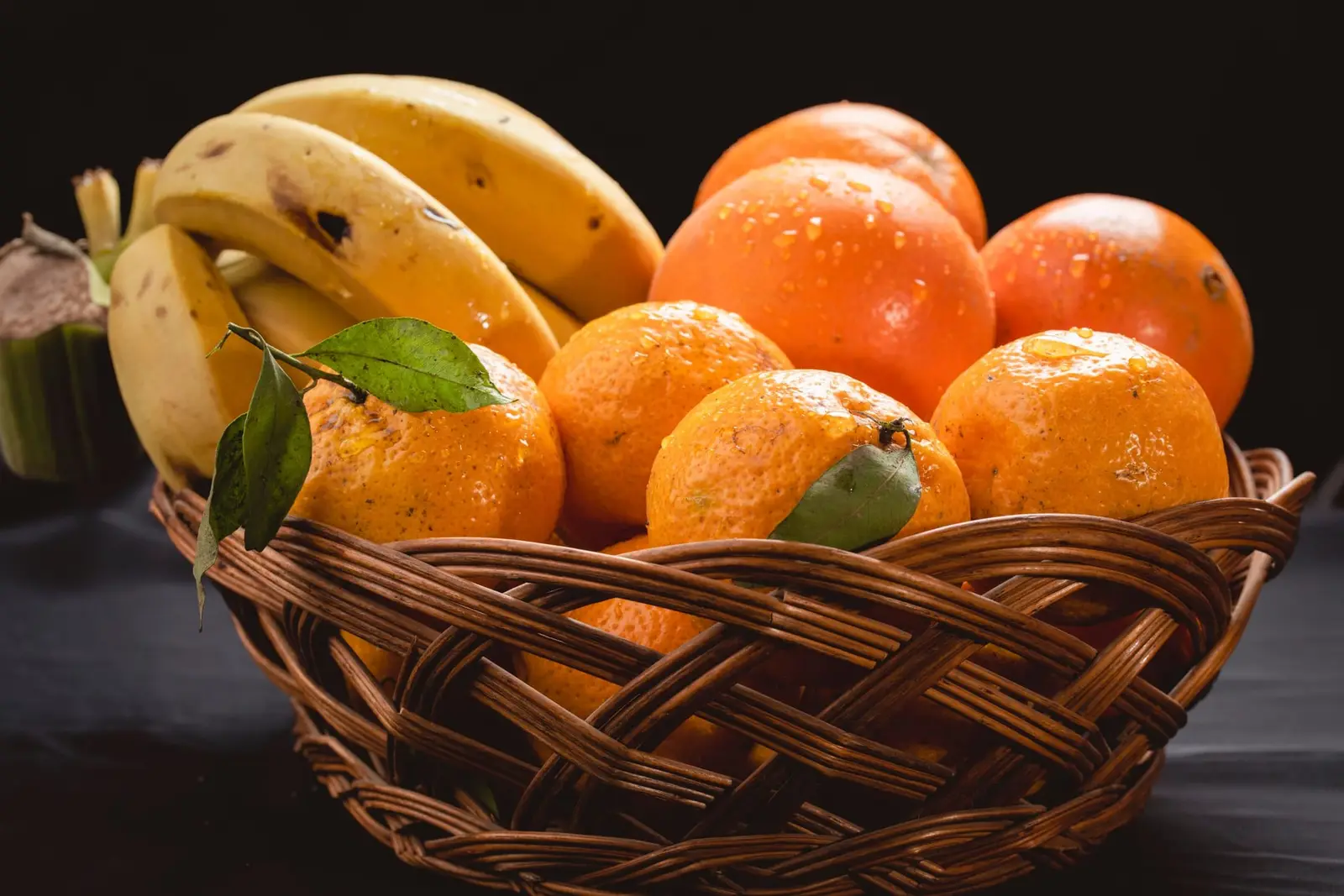
Keep a basket of fruit on the counter too, so it’s the easiest snack to grab.
12. Move backups somewhere else
A small pantry can’t hold the bulk pack, the spare and the one you’re using. Keep one of each item in the pantry and store the extras in a closet, a high cabinet or a bin under a bed.
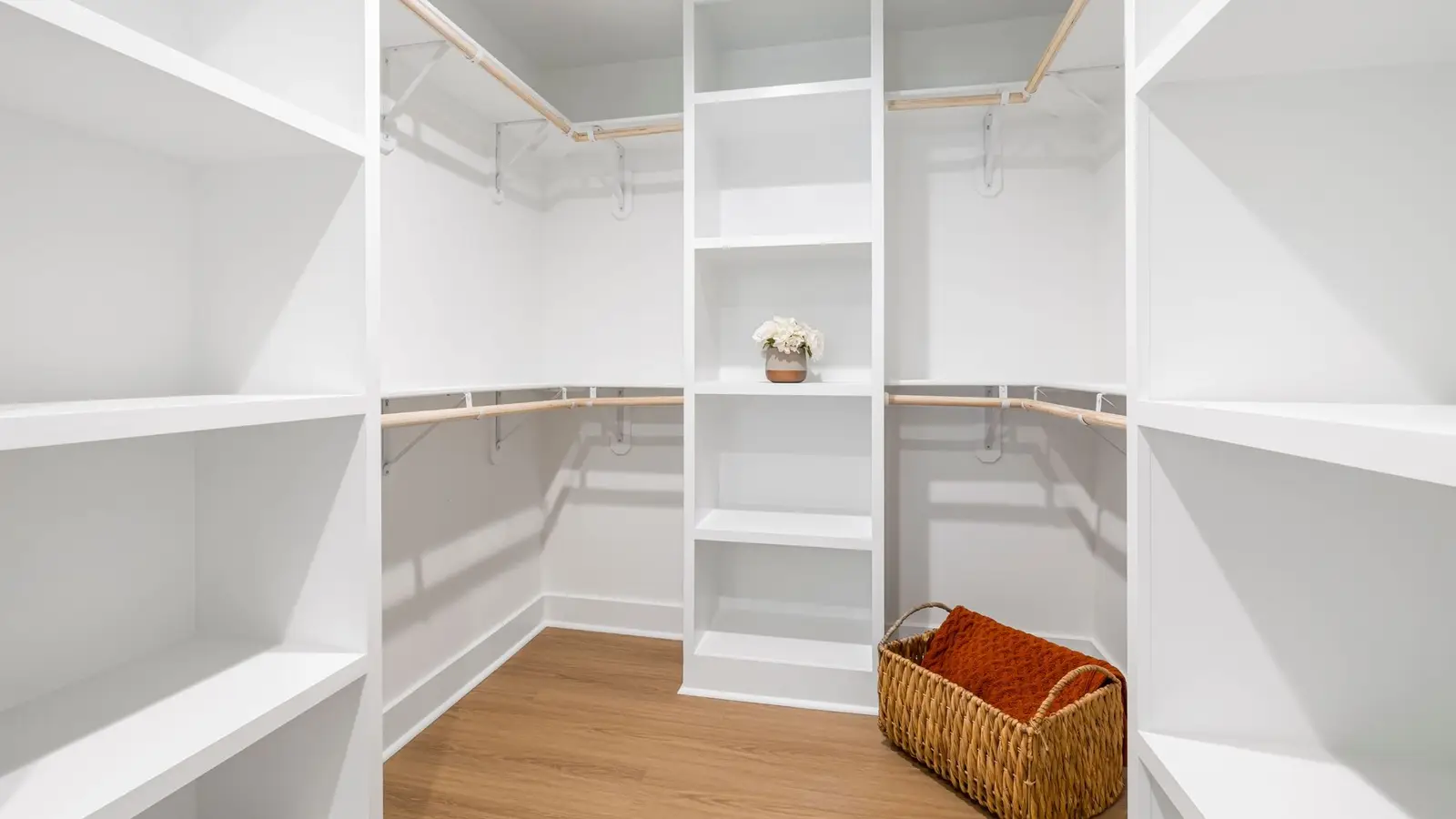
When the open one runs out, bring a backup in and add the item to your grocery list.
13. Add light to a dark pantry
A pantry you can’t see into is a pantry you don’t use well. A battery-powered, motion-sensing light under a shelf or above the door lights up the back corners the moment you open it.
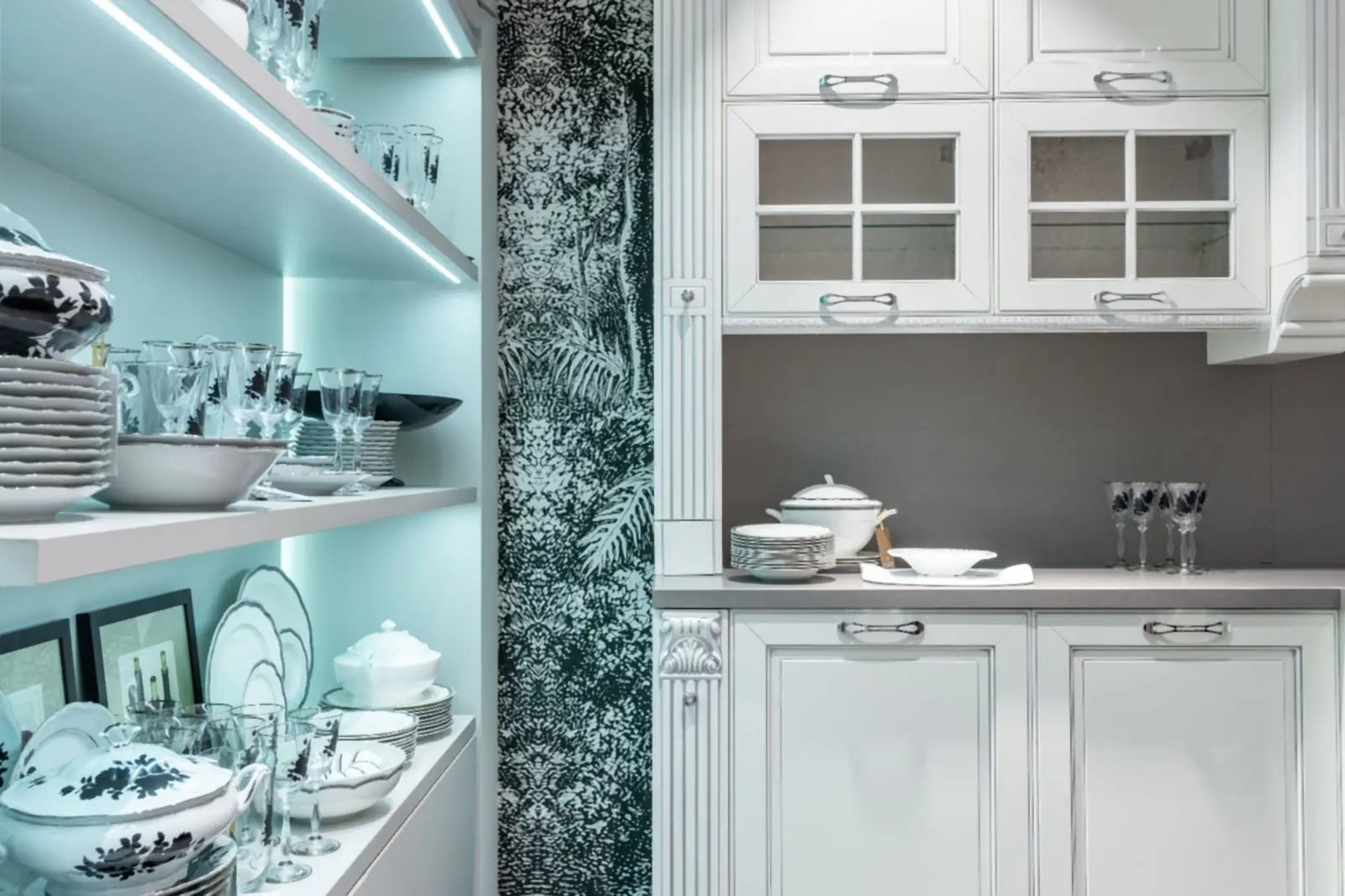
Stick-on lights need no wiring, so they work in a rental too.
To keep it sorted, put things back in their zone when you unpack groceries, with the new item behind the old one. Once a month, wipe the shelves and check dates on the front row. Every season, take everything out and start again from idea 1, which goes quickly once the zones are set.
Save this for later
Pin it to a board so it's there when you're ready to start.
Save to Pinterest(opens in a new tab)Make it easier
Free printable
A room-by-room declutter checklist that tells you exactly what to look for, with four piles to sort into so nothing ends up back on the shelf.
Free tool
Enter the width, depth and height of a shelf, a drawer or a cube cubby, and see which standard bins and baskets fit, how many, and how they line up.
Frequently asked questions
How do I organize a small pantry with deep shelves?
Use the depth for rows you can pull out: bins or baskets that slide forward like drawers, with one category in each. Keep the front of the shelf for what you use every week and put backups in the bins behind, so nothing gets lost at the back.
What should go on the top shelf of a pantry?
The things you use least and that are light to lift: party supplies, extra paper goods, seasonal baking pans and backups. Keep heavy cans, bottles and appliances low, where they're safe and easy to lift.
Should I take food out of its packaging?
For dry goods you use often, like flour, sugar, rice, pasta and cereal, a clear airtight container saves space, shows you when you're running low and helps keep pantry pests out. Cut the cooking directions off the bag and tape them to the container or keep them in a drawer.
How often should I clean out my pantry?
Do a quick check when you put groceries away, moving older items forward. A full clean-out a few times a year, where you take everything out, wipe the shelves and check dates, keeps a small pantry from filling up with things you can't use.